125kW Hybrid Inverter Comparison: Fox ESS vs. Deye
10/24/2026 · 4 min read
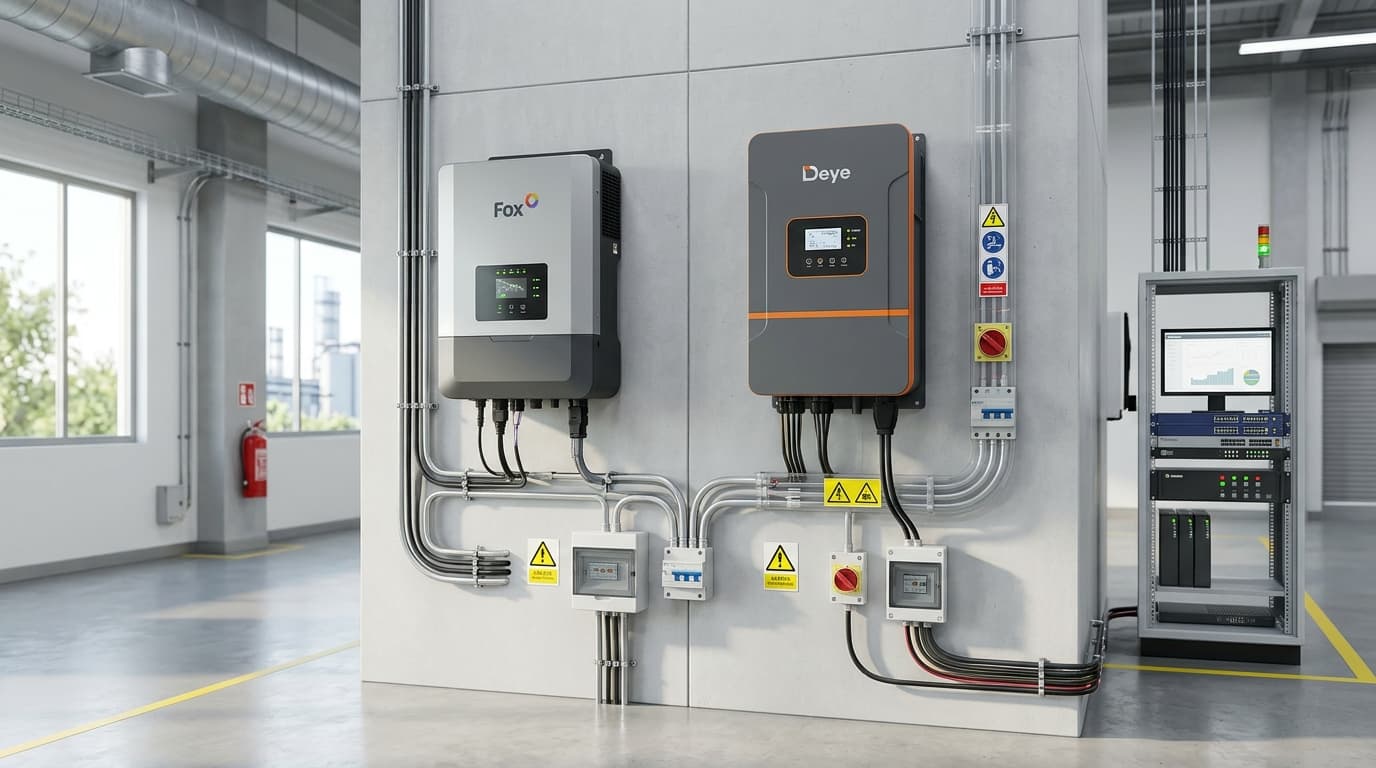
Detailed evaluation of 125kW hybrid inverters comparing the Fox ESS P3-PLUS-125 and Deye SUN-125K-SG02HP3 models for C&I facilities, along with optimal solutions from SVP Solar.
125kW Hybrid Inverter Comparison: Fox ESS vs. Deye
The commercial and industrial (C&I) solar sector is undergoing a rapid transition from traditional grid-tied systems to battery energy storage solutions (C&I BESS). In this trend, the three-phase 125kW hybrid inverter segment has taken center stage thanks to its versatile integration of grid-tied functionality, high-voltage battery storage, and industrial backup generator synchronization. Currently, the two most prominent contenders in this segment are the Fox ESS P3-PLUS-125 and the Deye SUN-125K-SG02HP3-EU-GM10. At SVP Solar (SAO VIET PHAT INVESTMENT CO., LTD), we analyze the core technical specifications to help factory managers and facility operators make the most accurate investment decisions.
Technical Overview of Fox ESS and Deye 125kW Hybrid Inverters
Both Fox ESS and Deye designed their 125kW product lines to work with High Voltage Battery systems, optimizing energy transmission efficiency, minimizing high-current losses, and reducing required copper cable cross-sections.
-
Fox ESS P3-PLUS-125: Part of the Fox ESS industrial P3 Plus ecosystem, this inverter emphasizes operational stability, intelligent heat dissipation, and heavy industrial load management. The unit features 4 independent MPPT trackers (2 PV strings per MPPT, totaling 8 strings), a battery voltage range from 180V to 950V, and an impressive maximum charge/discharge current of up to 240A.
-
Deye SUN-125K-SG02HP3-EU-GM10: Deye’s new-generation high-end hybrid model offers flexible string configuration with up to 10 independent MPPTs (2 strings/MPPT, totaling 20 PV input strings). It supports a battery voltage range from 160V to 1000V, a charge/discharge current of 200A, and supports DC oversizing up to 200% (250kWp DC).
Detailed Comparison: Fox ESS vs. Deye 125kW Hybrid Inverters
To evaluate real-world site compatibility, let us examine the critical operational aspects:
1. Roof Compatibility and PV Array Design
-
Deye SUN-125K-SG02HP3-EU-GM10: Equipped with 10 independent MPPTs, Deye’s inverter clearly outperforms on factory metal roofs with multiple slope orientations or obstacles causing localized shading (such as ventilation fans, skylights, or stairwells). Design engineers can divide PV strings across multiple orientations without worrying about voltage mismatch reducing overall yield.
-
Fox ESS P3-PLUS-125: With a 4-MPPT configuration, the Fox ESS inverter is an ideal choice for flat rooftops or uniform, rectangular industrial roofs. The 4-MPPT architecture simplifies the DC combiner box system, reduces mechanical connection points, and facilitates routine maintenance.
2. Charge/Discharge Performance and Load Energy Management
-
Battery Charge/Discharge Current: Fox ESS has an edge with a maximum charge/discharge current of 240A compared to Deye's 200A. This means the Fox ESS P3-PLUS-125 can deliver faster charging or discharging rates during sudden peak load surges.
-
TOU (Time of Use) Tariff Management: Both inverter models feature programmable charge/discharge scheduling according to peak and off-peak hours. Deye supports 6 customizable time slots and intelligently coordinates with existing diesel generator sets to optimize backup power during grid outages.
-
Storage Capacity Expansion: The connectivity ecosystem allows both units to be directly coupled in parallel with high-voltage LiFePO4 storage battery systems meeting industrial fire safety standards.
3. Paralleling and Capacity Expansion Capabilities
-
Deye supports parallel connection of up to 10 units in both on-grid and off-grid modes, scaling total system capacity up to 1.25MW without requiring complex external control cabinets.
-
Fox ESS supports cascaded configurations via CAN/RS485 industrial communication networks and the FoxCloud V2.0 cloud platform, providing engineers with intuitive, centralized remote system monitoring and management.
Which Inverter Should Your Business Choose?
The ideal choice does not simply hinge on maximum technical specifications; it depends directly on your roof architecture and facility energy management strategy:
-
Choose Deye SUN-125K-SG02HP3-EU-GM10 when: The factory rooftop has multiple installation azimuths, variable tilt angles, or when you intend to install a high DC oversizing ratio to maximize battery charging even under low-irradiance conditions.
-
Choose Fox ESS P3-PLUS-125 when: The factory has a uniform, consolidated rooftop area, requires large instantaneous discharge currents for heavy industrial motor loads, and prioritizes stable, coordinated operation within an integrated industrial management platform.
At SVP Solar, we always advise businesses not to rush purchasing decisions based solely on rated nameplate capacity. Actual economic returns, peak-shaving efficacy, and backup autonomy depend entirely on detailed on-site load profiles, consumption curves, and substation interconnection conditions.
To receive a detailed engineering design and advanced simulation report for your project, please contact our engineering team directly at SVP Solar for a comprehensive on-site assessment.