Tips for Long-Distance EV Driving Without Range Anxiety
10/29/2026 · 4 min read
Pocket safe long-distance electric vehicle (EV) driving tips, smart charging route planning, and optimal charging infrastructure solutions from SVP Solar experts.
Long-Distance EV Driving Tips Without Range Anxiety
The demand for long-distance EV driving for interprovincial business trips or holiday travel is growing rapidly in Vietnam. Although charging station infrastructure has made significant strides, mastering a pure electric vehicle over journeys spanning hundreds of kilometers still demands methodical preparation and an operating mindset different from traditional internal combustion engine (ICE) vehicles.
To help you get behind the wheel with confidence and eliminate the anxiety of running out of power along the way, SVP Solar shares practical experiences and optimal operating solutions below.
Plan Charging Stops and Apply a Real-World Range Buffer
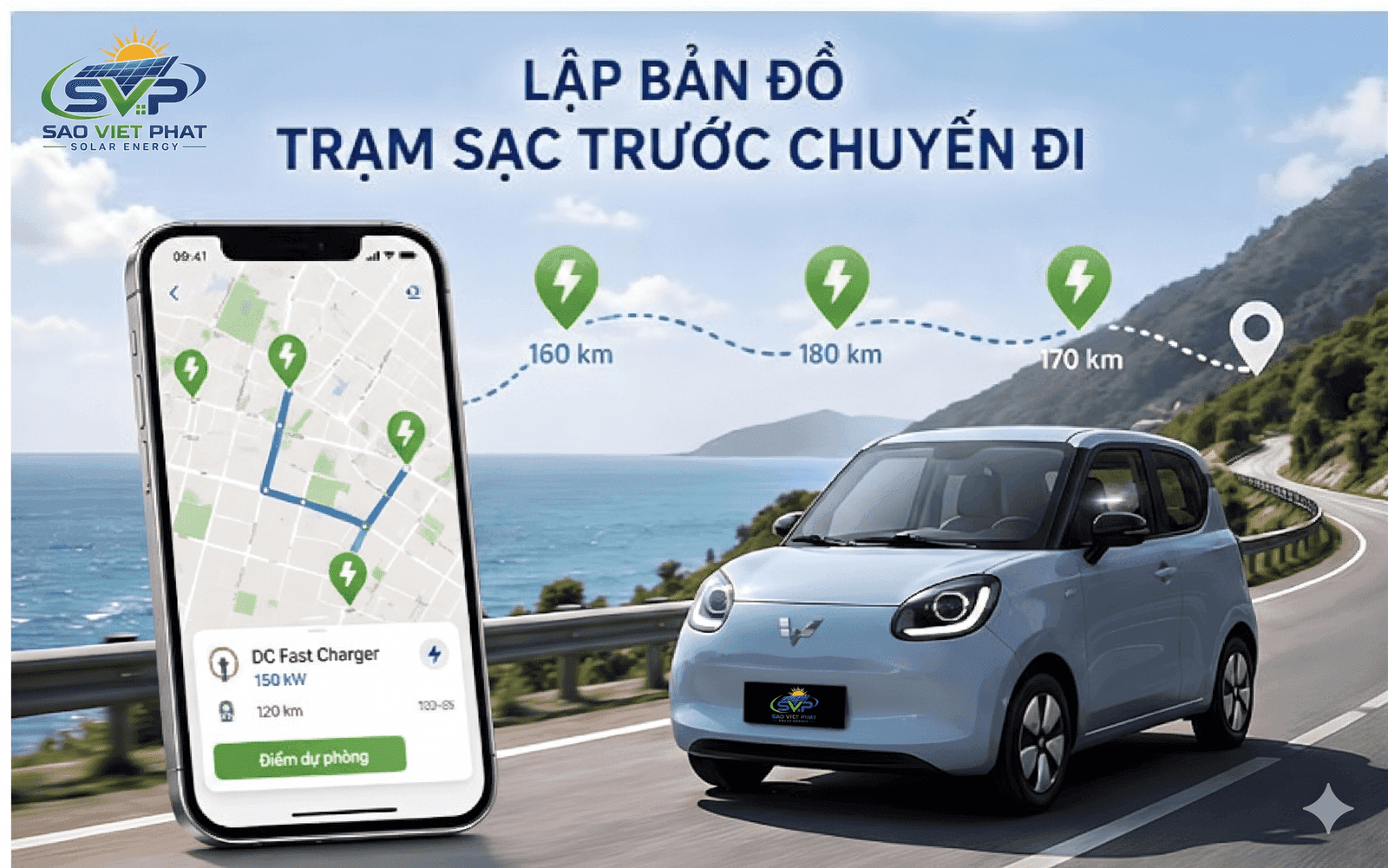
The biggest mistake many new EV drivers make is waiting until the battery indicator turns red before searching for a charging spot. On long trips, locating charging stations along your entire route in advance is an essential first step.
-
The 20–30% Buffer Rule: Official range ratings (such as WLTP or NEDC) are measured under ideal laboratory conditions. When carrying a full payload, running the air conditioning continuously in hot weather, or climbing mountain passes, consumption spikes significantly. If your vehicle is rated for 400 km on a full charge, the realistic distance planned between charging stops should only be 280 to 300 km.
-
Check Real-Time Charger Availability: Around 15–20 km before reaching your planned charging location, check the management app to verify available stalls or whether any units are undergoing maintenance. This allows you enough time to reroute to a secondary charging point if the primary hub is overcrowded.
-
Plan Overnight Charging Stops: Prioritize staying at hotels or resorts equipped with AC destination chargers. Slow charging overnight balances the battery cells and ensures a 100% state of charge by the next morning without wasting time waiting in queues.
Energy Optimization Techniques for Long-Distance EV Driving
Your driving style plays a crucial role in determining the real-world range achievable per charge cycle:
-
Maintain the Sweet Spot Speed (70–90 km/h): Unlike gasoline vehicles that are fuel-efficient at highway cruising speeds, EVs consume significantly more energy when traveling over 100 km/h due to heightened aerodynamic drag and single-speed reduction gearing. Maintaining a steady pace using Cruise Control allows the Battery Management System (BMS) to regulate discharge current smoothly.
-
Maximize Regenerative Braking: Setting regenerative braking to a higher level (or utilizing One-Pedal driving mode) is especially effective when descending steep slopes or winding passes. The recovered kinetic energy can restore 10–15% of battery capacity while reducing wear and thermal strain on the mechanical brakes, preventing brake fade from overheating fluid.
-
Optimize Climate Control Settings: Cabin cooling draws high-voltage power directly from the main traction battery. Setting the temperature to 25–26°C and utilizing internal air recirculation reduces the load on the A/C compressor, conserving a substantial amount of energy reserve.
Fast Charging Best Practices on the Road
Many EV owners instinctively want to charge their vehicles to 100% at public DC fast chargers. However, due to the physical characteristics of lithium-ion cells, charging speeds throttle down drastically after hitting the 80% threshold to prevent overheating and preserve cell longevity.
The time required to charge from 80% to 100% often equals the time spent going from 20% to 80%. Therefore, unless the next leg of your journey completely lacks charging options, you should unplug once your vehicle hits around 80%. This saves time and frees up the station for fellow drivers.
In the event of a complete battery drain, never allow the vehicle to be towed with wheels rolling on the ground, as back-EMF from the spinning electric motors can cause severe electrical and inverter damage. Always insist on a flatbed tow truck for safe recovery.
SVP Solar - Professional and Sustainable EV Charging Station Solutions
The rapid rise of new energy vehicles requires charging infrastructure to expand not only along national highways but also across hotels, resorts, highway service areas, and private residences.
As a specialist in the clean energy sector, SVP Solar (SAO VIET PHAT INVESTMENT CO., LTD) delivers comprehensive technical consulting, engineering, and installation services for EV charging stations:
-
Site Survey and Load Assessment: We evaluate existing electrical grid capacity accurately, engineering safe power supply designs for both residential AC wallboxes and high-power commercial DC fast chargers.
-
Solar and Battery Storage Integration: Integrating rooftop solar systems with smart battery energy storage systems allows businesses and homeowners to generate clean, low-cost electricity for EV charging, optimizing operating expenses and reducing grid dependency.
-
Standard-Compliant Construction: Grounding systems, surge protection devices, and specialized switchgear are rigorously tested, guaranteeing safety for both users and vehicles.
Whether you are an individual homeowner or a commercial business seeking to install an EV charging solution, contact us through our consultation page to receive an on-site survey and a customized implementation plan from SVP Solar's engineering team.